
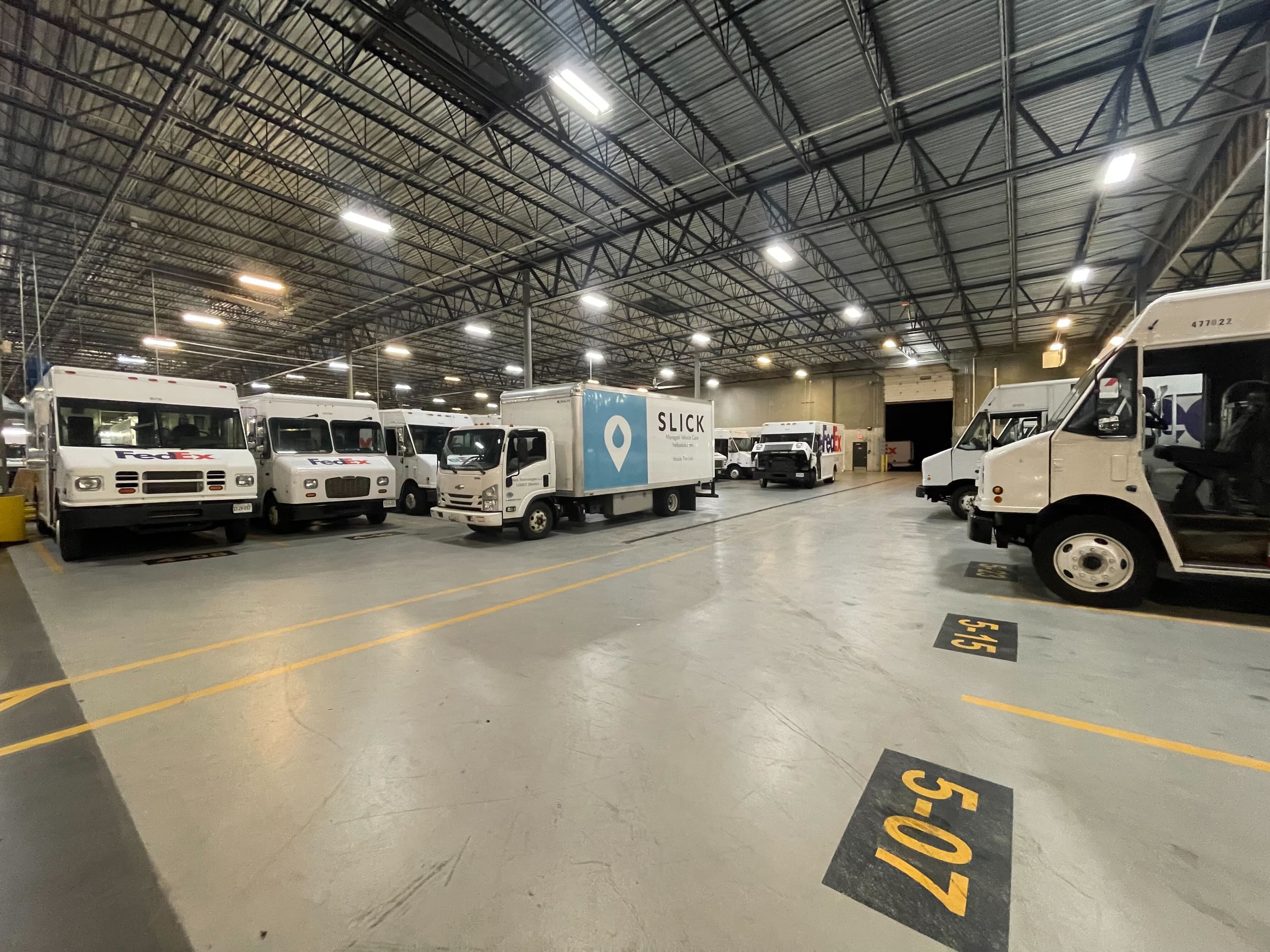
Case Study
FedEx ISP Case Study: 40-Truck Fleet Saves over $54,000/Year
How a FedEx Independent Service Provider eliminated shop visits, cut spare vehicles from 4 to 1, and reclaimed 40+ hours per month with managed maintenance.
5 min read
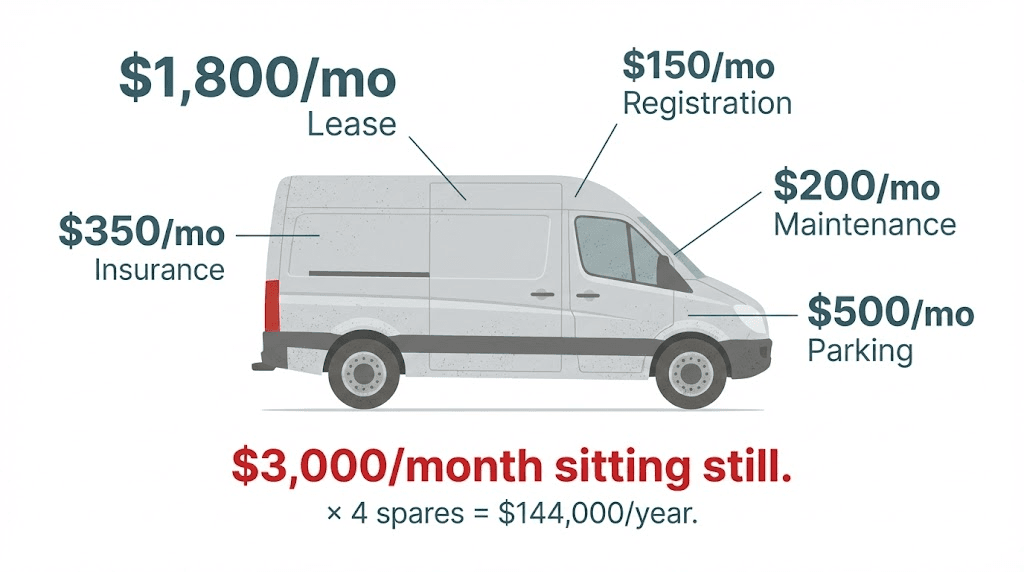
Every spare vehicle sitting in your lot has a monthly price tag. Most fleet operators know the lease payment. What they don't add up is everything else.
Here's what a single spare vehicle actually costs to carry:
Total per spare: $1,900–$3,050/month. That's $22,800–$36,600/year.
Now multiply by however many spares you're carrying.
A 40-truck fleet running 4 spares? That's $91,200–$146,400 per year in carrying costs for vehicles that aren't generating a dime of revenue. They exist for one reason: your maintenance is unreliable enough that you need a backup plan.
Think about that. You're not paying for spare trucks. You're paying for the failure of your current maintenance setup.
Nobody wakes up and decides to lease 4 trucks they don't need. Spares accumulate because of a pattern that looks like this:
Week 1: A truck goes to a shop for brakes. The shop says it'll be back in a day. It takes three. A route doesn't get covered. A customer complains. A driver sits idle.
Week 4: It happens again. Different truck, different shop, same result. The fleet manager pulls a truck from the overnight rotation to cover the gap. Now the night shift is short.
Month 3: The owner does the math. One missed route costs $1,500–$2,500 in revenue. Two missed routes in a month and you've lost more than a lease payment. So they lease a spare. Problem solved — until it isn't.
Month 8: One spare isn't enough. The shop had two trucks for a week. A third needed emergency tires. Now you need two spares.
Year 2: You're carrying four spares across the fleet. You don't remember exactly when it got to four. It just happened. Each one felt like the rational decision at the time. And honestly, it was — given the circumstances.
The circumstances being: your maintenance is reactive, your shops are unreliable, and you have zero visibility into what's coming next.
Spare vehicles are a symptom. The disease is unpredictable maintenance.
When you're relying on a patchwork of local shops — a tire chain here, a mom-and-pop garage there, a mobile mechanic when you're desperate — nothing is coordinated. No one knows your fleet. No one is tracking intervals. No one is catching the brake wear at 60% before it becomes a breakdown at 100%.
So trucks go down unexpectedly. And when trucks go down unexpectedly, you need backups.
The number of spares you carry is a direct measure of how little you trust your maintenance. Four spares? You don't trust it at all.
A FedEx ISP running 40 delivery trucks out of a single terminal was carrying 4 spare vehicles. They were burning $6,000–$8,000/month just on spare carrying costs — leases, insurance, registration — for trucks that existed only because shops couldn't be trusted to turn work around same-day.
Within 12 months of switching to Slick's managed maintenance, they dropped from 4 spares to 1.
Here's what changed:
Vehicles stopped leaving the yard. Every service event — oil, inspections, tires, brakes, repairs — happened on-site, after hours. No shop trips. No 3-day waits. No missed routes.
Problems got caught early. Consistent inspections with photo and video documentation meant brake wear, tire issues, and fluid leaks were flagged weeks before they became failures. The fleet went from reactive replacements to scheduled ones.
The fleet manager got visibility. For the first time, every vehicle's maintenance status, upcoming service, and historical work was in one dashboard. No more spreadsheets. No more guessing which truck was a ticking time bomb.
Result: over $54,000/year in savings from spare vehicle reduction alone. That's before you count the eliminated shop markup, the reclaimed fleet manager hours, and the avoided emergency repairs.
They kept one spare — and after another six months of data, they were evaluating whether they needed it at all.
Here's a quick exercise. Pull up your fleet roster and answer three questions:
1. How many spares are you carrying right now? Count every vehicle that exists primarily as a backup — not assigned to a regular route or driver.
2. What does each one cost you per month? Add the lease (or depreciation if owned), insurance, registration, and any maintenance. Don't forget parking if you're paying for lot space.
3. Why do you need them? Be honest. Is it because your maintenance is unpredictable? Because shops take too long? Because you've been burned before and spares feel like insurance?
If the answer to #3 is anything related to maintenance reliability, your spare fleet isn't a fleet management strategy. It's a tax on broken maintenance.
Spares exist because shops are slow, unpredictable, and disconnected from your operations. Remove those variables and the need for spares shrinks — sometimes dramatically.
Consistent, on-site preventive maintenance on a mileage-based schedule. Inspections that catch problems at 60% wear instead of 100%. Repairs done on your yard, after hours, with your vehicles ready by morning. One provider, one platform, one monthly cost.
That's what managed maintenance does. And the first thing most fleets notice isn't the smoother operations or the better visibility — it's the spare they no longer need.
Every spare vehicle you eliminate is $22,000–$36,000/year back in your pocket. Not in reduced breakdowns. Not in avoided downtime. Just in carrying costs you stop paying for trucks that were never supposed to exist.
How a FedEx Independent Service Provider eliminated shop visits, cut spare vehicles from 4 to 1, and reclaimed 40+ hours per month with managed maintenance.

You budget for parts and labor. But the real cost of fleet maintenance is the hours your team burns coordinating shops, chasing paperwork, and managing breakdowns.
Book a demo and see how Slick keeps your fleet running with less effort.